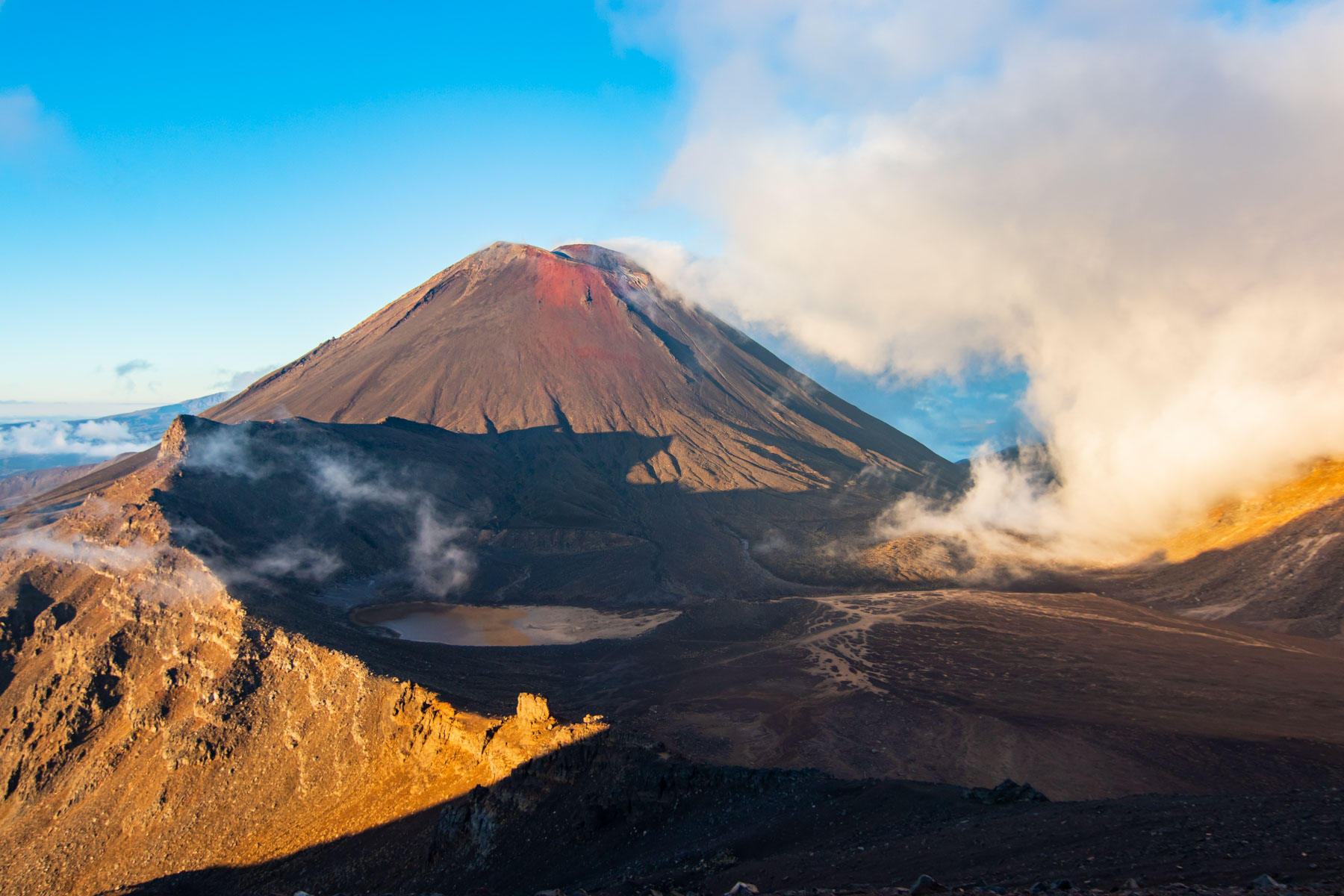
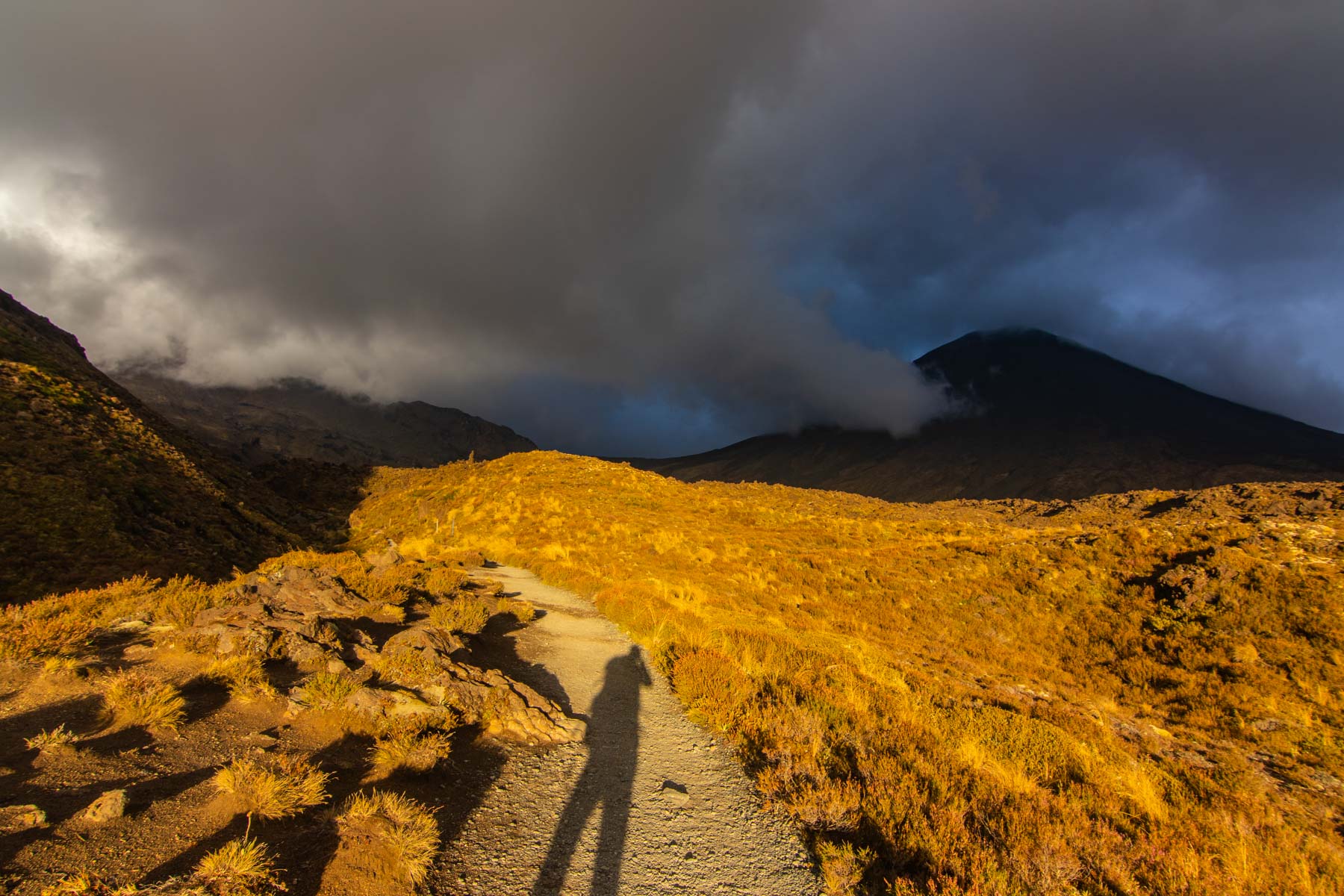
Tongariro National Park is made up of three volcanoes: Ngauruhoe (above), Tongariro and Ruapehu.
One of my best hikes ever! | Tongariro National Park
New Zealand Adventure Published on 2019-04-04 Revised on 2024-03-23
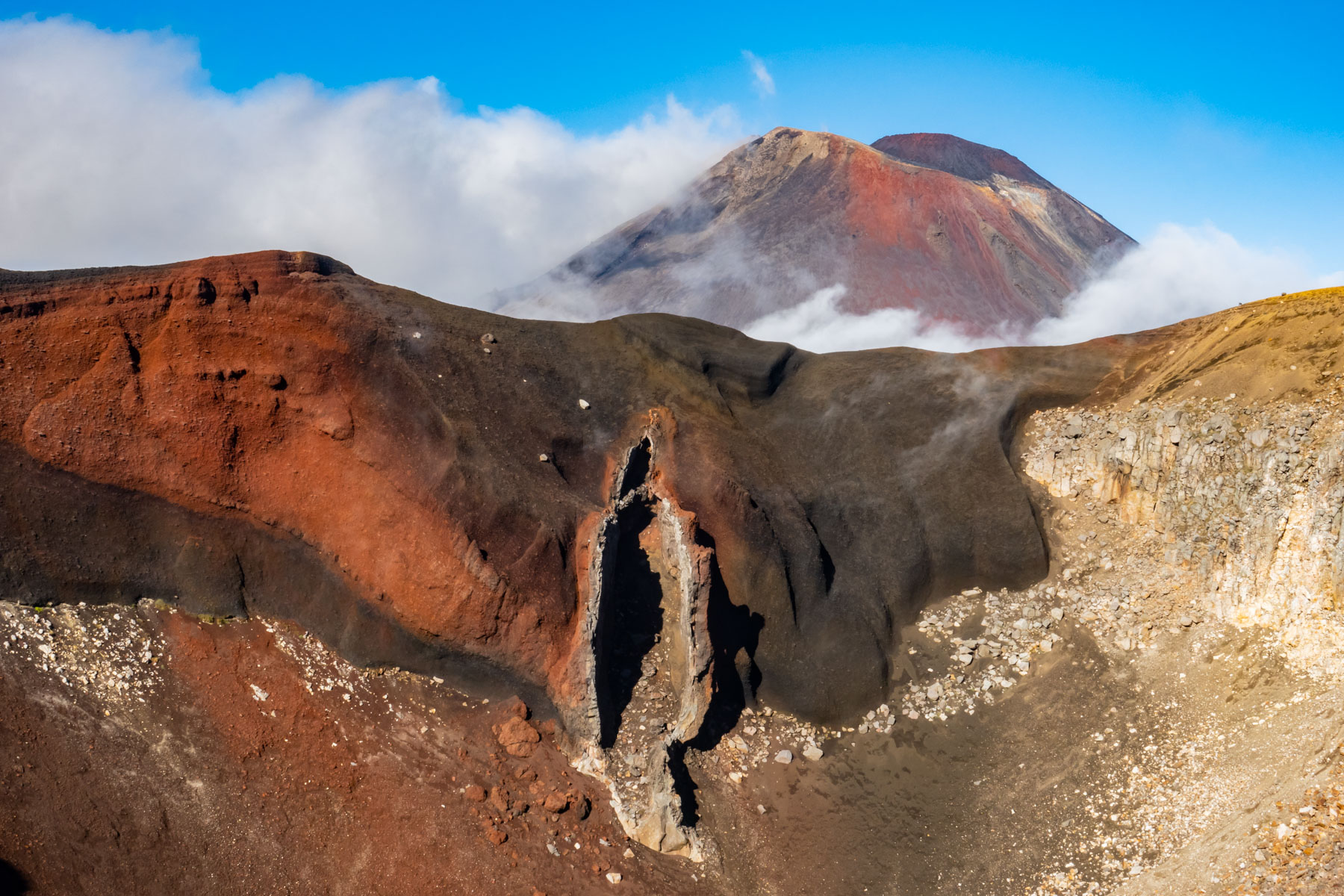
The first rays are slowly warming me up. As the sun rises, the view becomes more spectacular. An icy wind blows across my face as I contemplate the massive Ngauruhoe volcano. This majestic cone is one of the country’s most active stratovolcanoes, with at least sixty eruptions since records began in 1839. Film fans will recognize the features of Mount Doom from the famous Lord of the Rings trilogy.
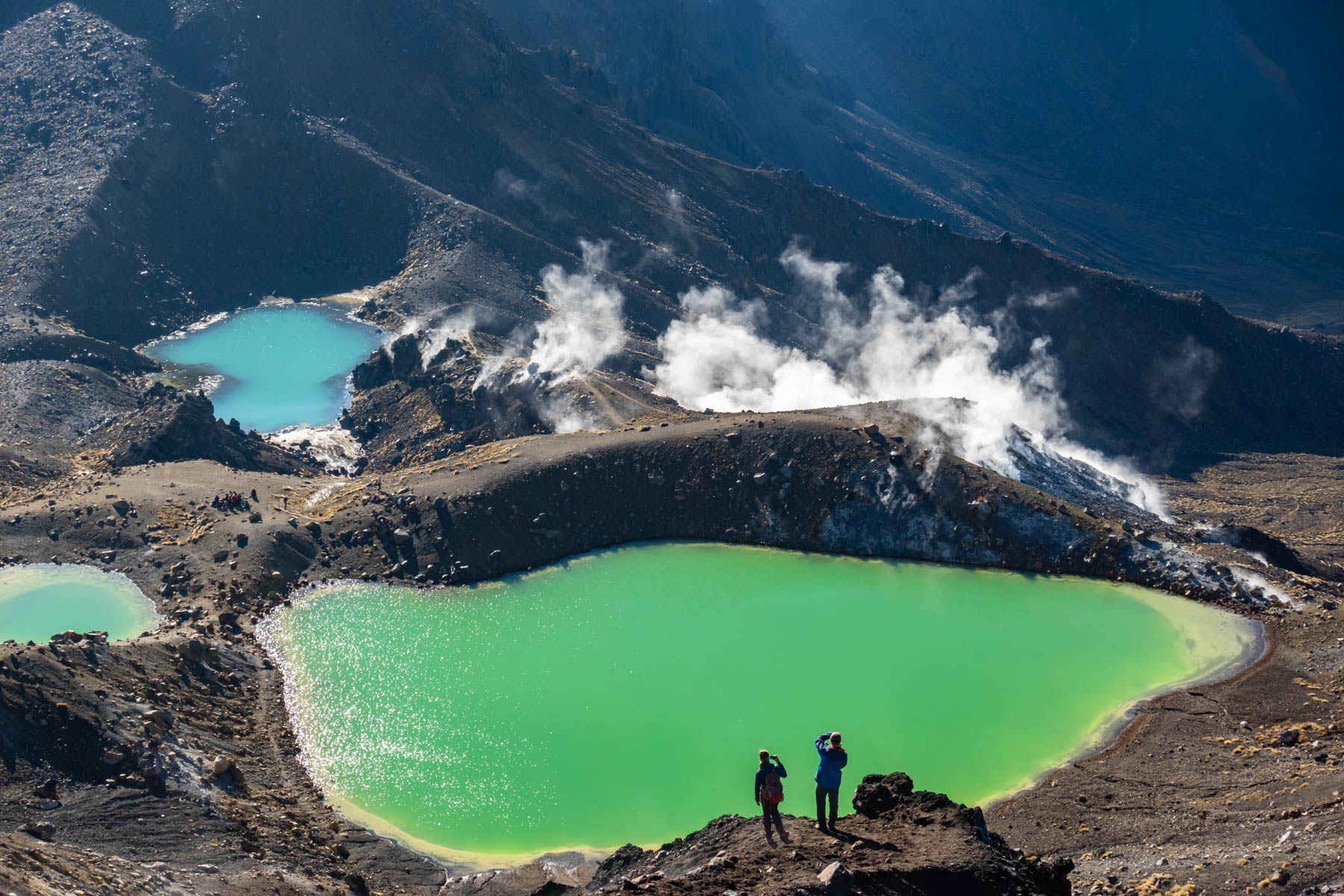
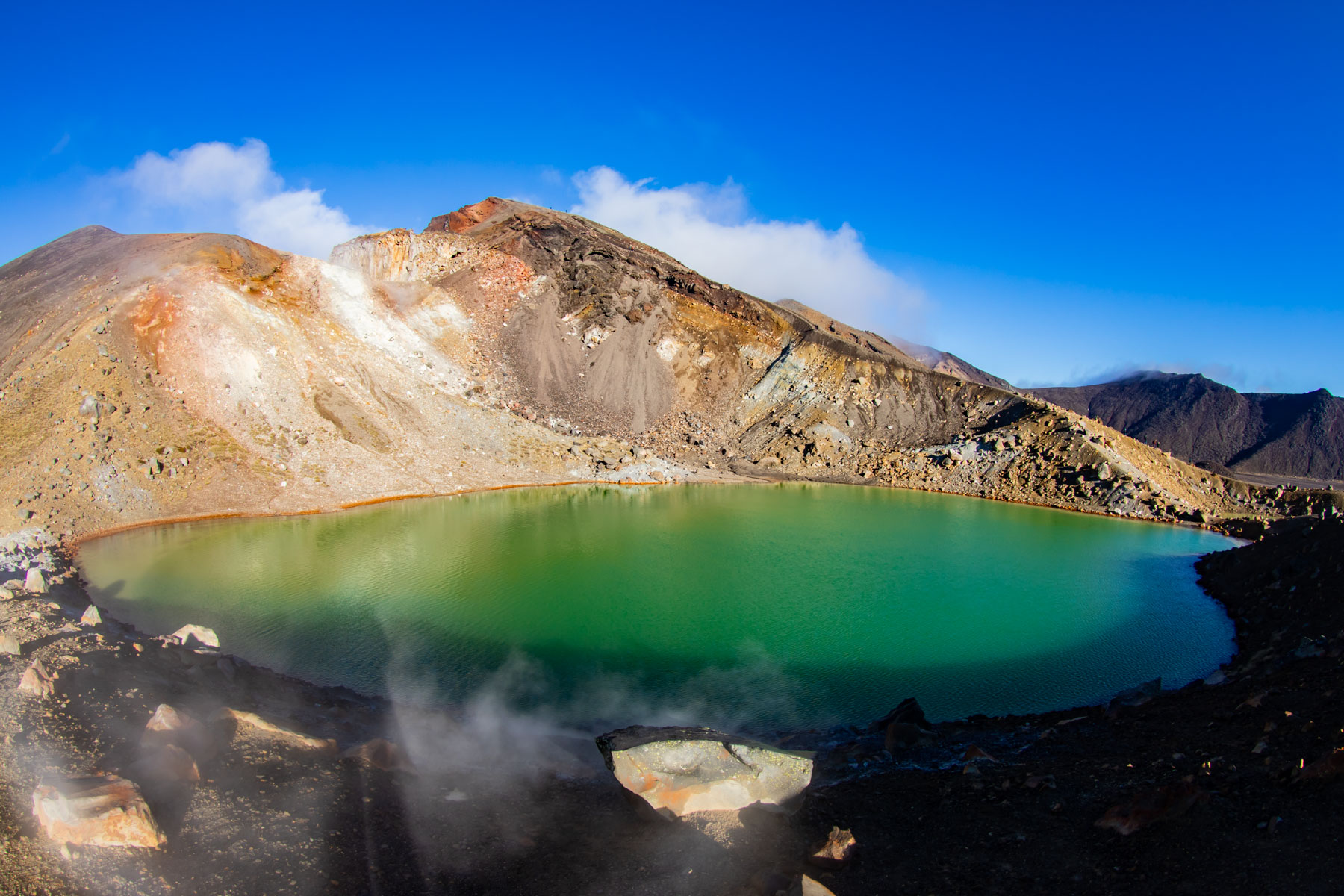
After taking a last photo of the red crater, I descend a steep, slippery rocky slope, while admiring the breathtaking beauty of the emerald lakes below.
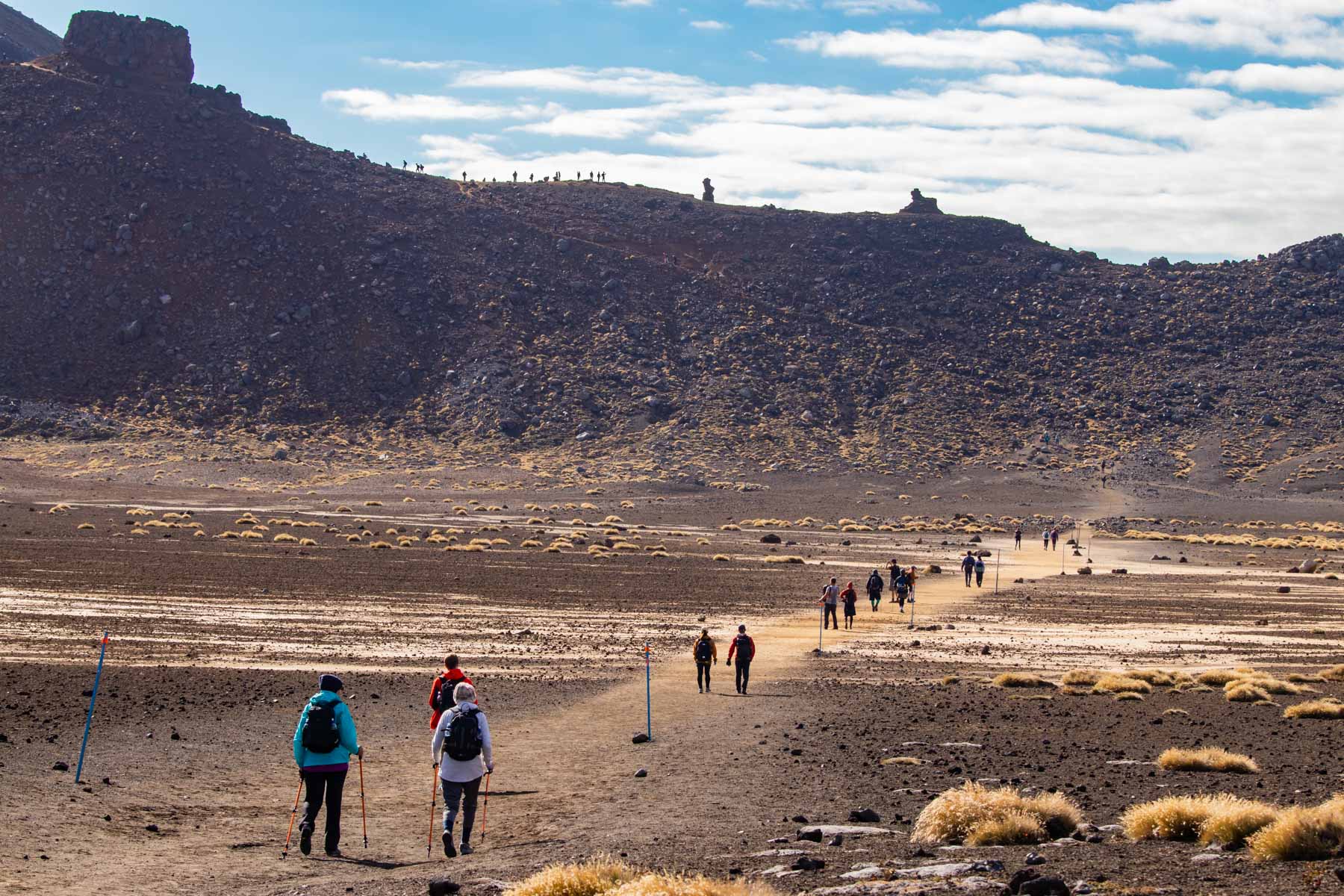
Tongariro Alpine Crossing Trail promises to be one of the most gorgeous hikes in New Zealand. Every day, 1,000 to 2,000 hikers arrive by shuttle bus at Mangatepopo, cover the 19 km and finish in the afternoon at Ketetahi. Personally, I like to get away from the usual schedule…
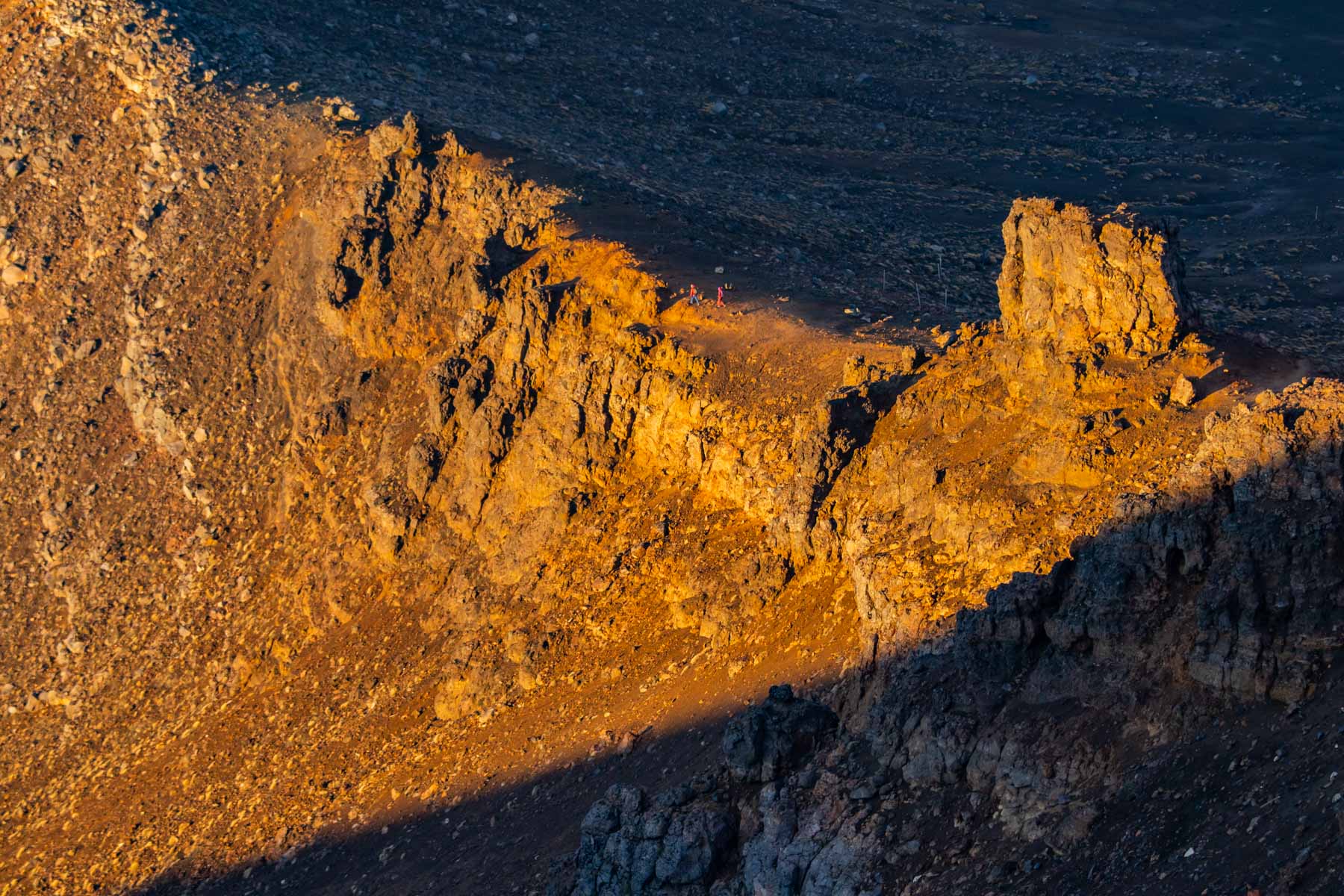
Notice the hikers in this image, then realize the scale of this setting with the previous photo.
These emerald lakes are icy and acidic, and swimming is obviously not recommended.
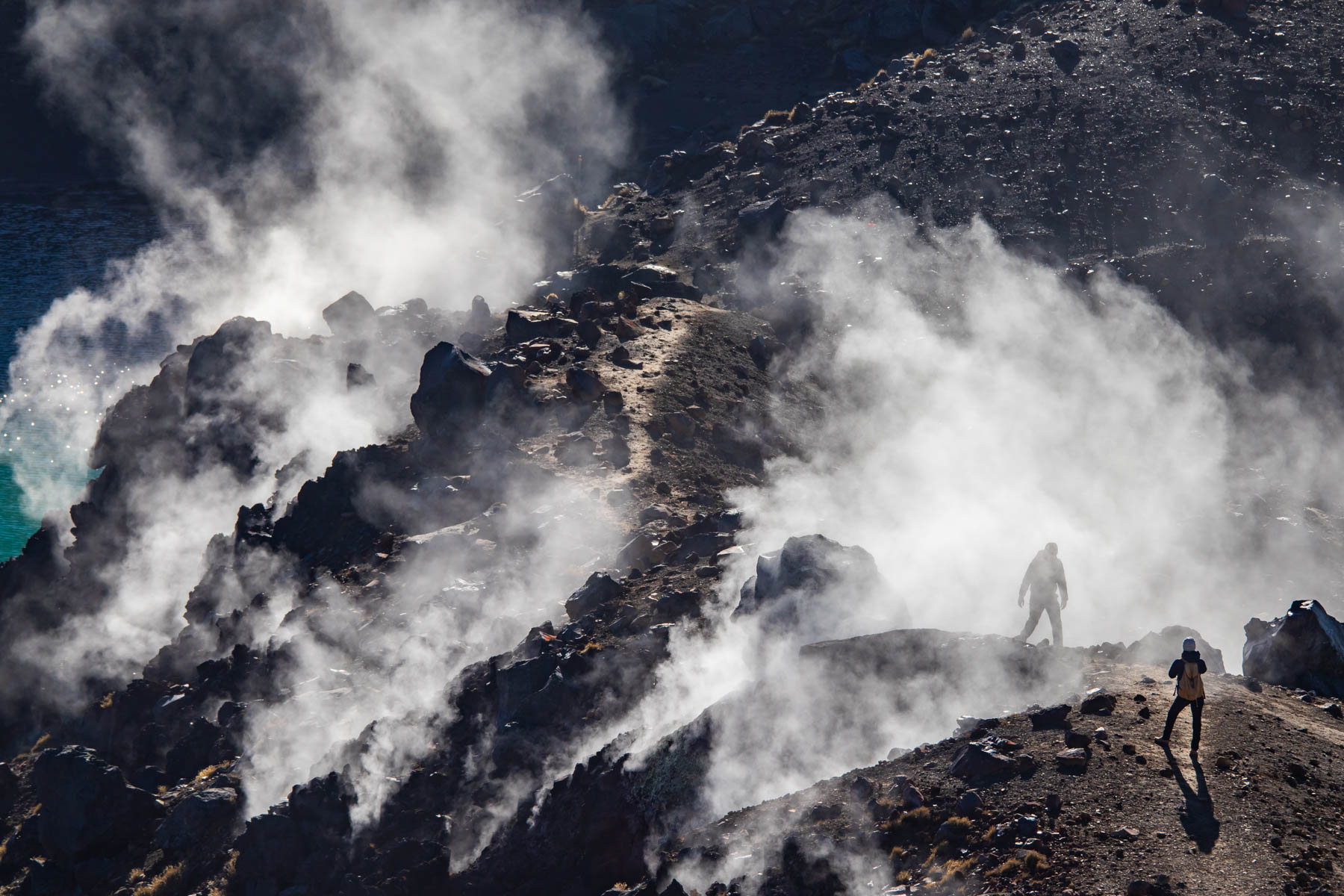
To add a little mystery to this incredible setting, fumaroles gush up from the depths of the Earth, giving off the sulphurous smell of rotten eggs.
Emerald Lake at the foot of the red crater, what an explosion of color!
This zone belongs to the Pacific Ring of Fire, home to the majority of the world’s most active volcanoes. Here’s the Red Crater in the foreground.
The South Crater looks like a huge plateau in the heart of the mountains.
Be aware that you are entering a Maori sanctuary of profound spiritual significance. In 1887, Chief Horonuku donated three sacred volcanoes to the British Crown. Tongariro became the country’s first national park.
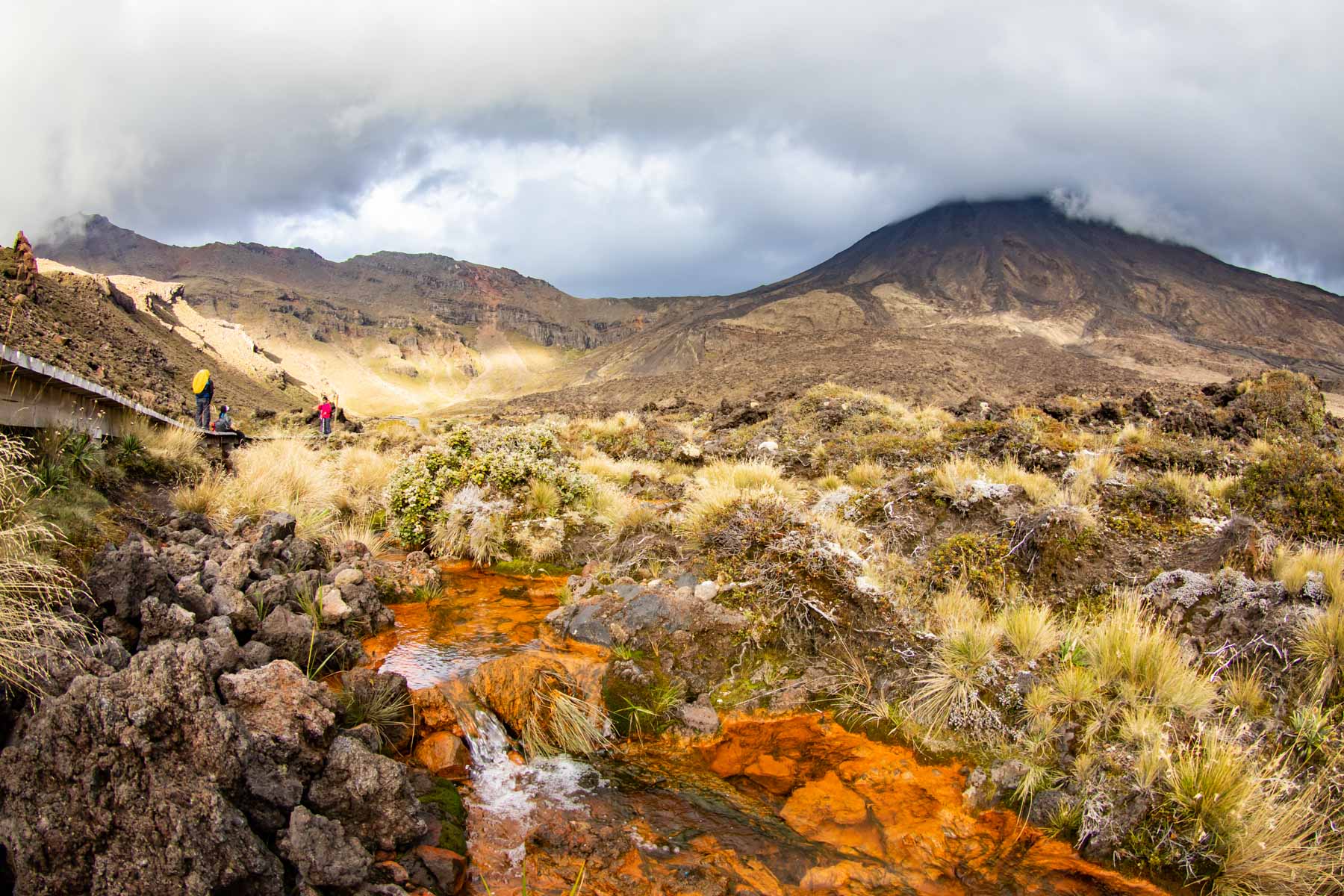
In alpine terrain, weather conditions can change very quickly. Each year, many people require evacuation from the mountains by helicopter. With the right planning and equipment, it’s easier to adapt to Mother Nature’s surprises.
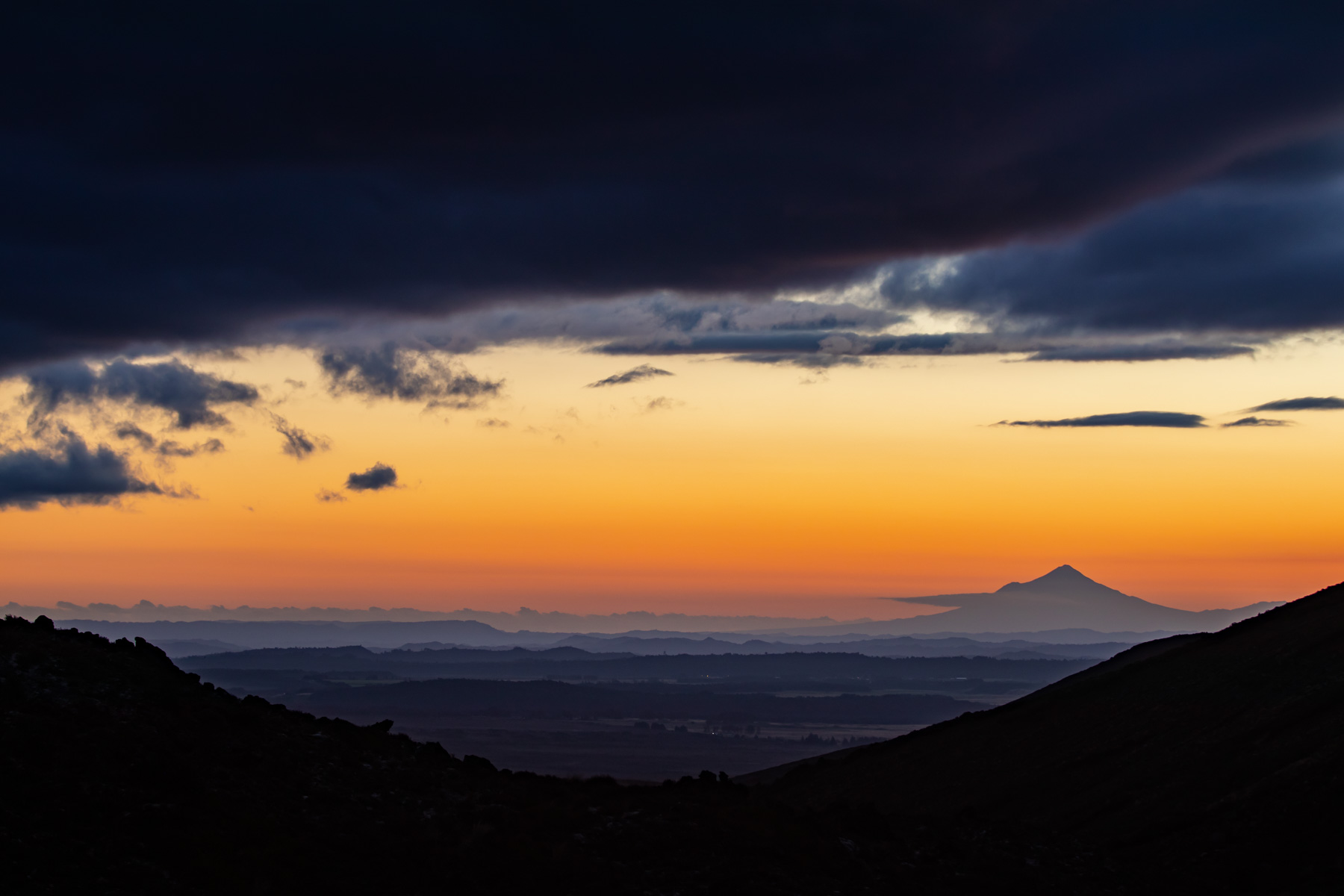
Taranaki volcano lies about 140 km west of Ngauruhoe volcano.